
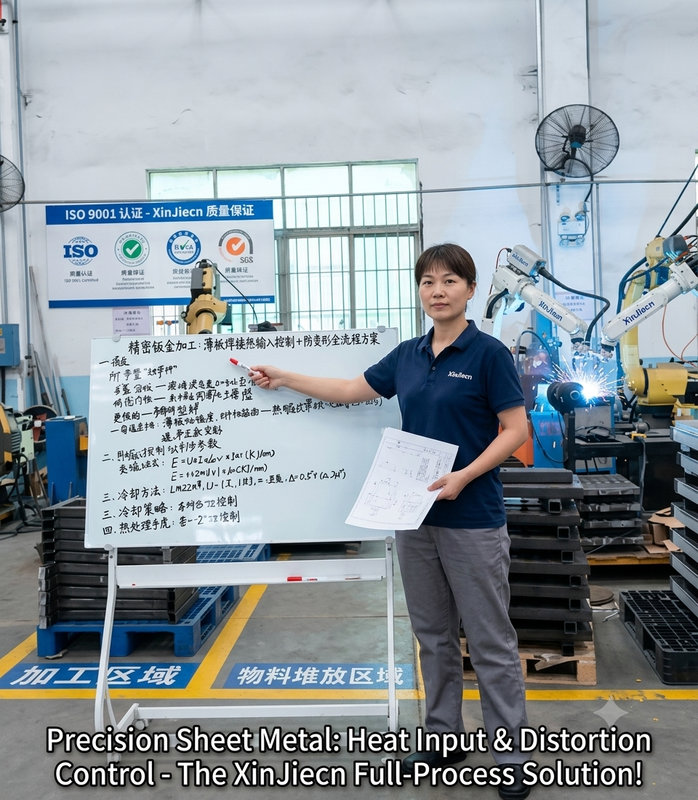
Precision Sheet Metal: Full-Process Solution for Heat Input Control and Distortion Prevention in Thin Plate Welding
在精密钣金加工中,厚度在 0.5mm – 3.0mm 之间的薄板焊接堪称“硬骨头”。许多电焊工常抱怨:“一焊就变形,不是起波浪就是烧穿,难道真是手艺不行?”
事实上,这往往不是手艺问题,而是缺乏系统性的热输入控制(Heat Input Control)与防变形全流程工艺设计。
In precision sheet metal processing, welding thin plates with a thickness of 0.5mm to 3.0mm is notoriously difficult. Many welders complain: “It deforms as soon as it’s welded—either warping into waves or burning through. Is it just bad craftsmanship?”
In fact, this is rarely a skill issue. Instead, it stems from a lack of systematic heat input control and a full-process anti-deformation strategy.
一、 薄板焊接的三大核心痛点 (The Three Core Pain Points)
当板材厚度超薄(尤其是接近或低于 0.5mm)时,局部高温会迅速导致金属材料超过屈服极限,产生严重的残余应力。常见问题包括:
When the sheet metal is ultra-thin (especially near or below 0.5mm), localized high temperatures quickly cause the metal to exceed its yield limit, generating severe residual stress. Common issues include:
- 波浪变形 (Buckling / Wave Distortion): 因纵向 and 横向收缩引起的失稳变形。
- 烧穿 (Burn-Through): 熔池温度过高,导致液态金属流失形成熔洞。
- 扭曲变形 (Twisting): 焊缝受力不均,导致整体构件不在同一平面。
二、 核心控制参数与计算公式 (Core Parameters & Formula)
要真正控制变形,必须量化热输入量(E)。其核心计算公式如下:
To effectively control deformation, the Heat Input (E) must be quantified. The core formula is:
E = η × (U × I) / v
参数说明 (Parameters):
- E: 焊接线能量 / Heat Input (单位: J/mm 或 kJ/mm)
- η: 热效率系数 / Thermal Efficiency Coefficient (如 TIG 氩弧焊约为 0.6 – 0.8)
- U: 焊接电压 / Welding Voltage (单位: V)
- I: 焊接电流 / Welding Current (单位: A)
- v: 焊接速度 / Welding Speed (单位: mm/s)
核心逻辑: 降低电流 I、提高速度 v、采用脉冲模式,是预防薄板烧穿与变形的黄金法则。
Core Logic: Reducing current I, increasing speed v, and utilizing pulse modes are the golden rules for preventing burn-through and distortion.
三、 全流程防变形工艺数据指南 (Full-Process Anti-Deformation Guide)
以下结合中山鑫捷先进加工经验与实验室数据,整理出针对不同厚度薄板的焊接工艺参数与防变形策略:
| 板材厚度Sheet Thickness (mm) | 推荐焊接电流Recommended Current (A) | 焊接速度Welding Speed (mm/min) | 核心防变形策略Core Anti-Deformation Strategies |
| 0.5 – 0.8 | 20 – 45 (脉冲/Pulse) | 350 – 500 | 反变形预顶 + 铜散热垫板 Anti-deformation pre-topping + Copper chill bars |
| 1.0 – 1.5 | 45 – 75 | 300 – 400 | 短段跳焊 + 逐段风冷 Short section jump welding + Segmented air cooling |
| 1.5 – 2.0 | 70 – 110 | 250 – 350 | 分段退步焊 + 刚性固定 Segmented back-step welding + Rigid fixture |
| 2.0 – 3.0 | 100 – 140 | 200 – 300 | 优化焊接顺序 + 间歇冷却 Optimized welding sequence + Intermittent cooling |
四、 四大王牌防变形实操绝招 (Four Ace Tactics for Distortion Prevention)
1. 反变形预顶 (Anti-Deformation Pre-Topping)
在焊接前,利用工装夹具将薄板人为地向焊缝收缩的反方向进行预弯(预顶)。焊接完成后,焊缝自身的收缩力刚好将板材拉回平整状态。
Before welding, use fixtures to pre-bend the sheet metal in the opposite direction of the weld shrinkage. After welding, the natural shrinkage force pulls the plate perfectly flat.
2. 短段跳焊法 (Short Section Jump Welding)
严禁一路拉弧到底!应将长焊缝划分为若干短段(如每段 20-30mm)。采用“跳跃式”焊接(例如:先焊第 1 段,再跳至第 3 段,再回补第 2 段),分散热量积聚。
Never drag a continuous arc from start to finish! Divide long welds into short segments (e.g., 20-30mm each). Use a “jumping” sequence to disperse heat accumulation.
3. 分段降温与散热 (Segmented Cooling & Heat Sinking)
- 铜垫板法 (Copper Chill Bars): 在焊缝背面紧贴高导热的铜块,快速抽走多余热量。
- 强制风冷 (Forced Air Cooling): 每完成一个短段焊接,立即使用压缩空气进行局部降温,将母材温度严格控制在层间温度要求以内。
4. 刚性固定与强力夹具 (Rigid Fixturing)
使用气动或手动快速夹具,将薄板紧紧压在焊接平台上。在金属冷却并达到结构稳定之前,绝不释放夹具,强行限制其热胀冷缩的空间。
五、 结论 (Conclusion)
薄板大件焊完想要照样平平整整,核心在于“控热”与“借力”。通过精准的线能量计算、合理的跳焊顺序、高效的铜板散热以及科学的反变形预顶,超过 0.5mm 的薄板焊接非但不会“翻车”,反而能实现工业级的完美平整度。
Achieving a perfectly flat finish on large, thin plate weldments comes down to two factors: Heat Control and Mechanical Restraint. By accurately calculating heat input, optimizing jump-welding sequences, applying copper heat sinks, and designing scientific pre-topping, welding thin plates over 0.5mm will no longer lead to failure, but rather result in flawless, industrial-grade precision.
如果您想亲眼见证 30,000 瓦光纤激光切割机、智能折弯中心以及工业机器人在薄板焊接防变形中的实际应用,或者想进一步交流更复杂的精密钣金加工工艺,欢迎随时联系我们。